
Future perfect continuous
(Future perfect continuous)
Introdução
Nós usamos o futuro contínuo perfeito para descrever uma ação contínua que já está em andamento em um ponto no futuro.
Nós muitas vezes usamos com "for" para afirmar a quantidade de tempo entre quando a ação começou e um ponto de seu progresso no futuro, ou o ponto em que esperamos a ação terminar.
Nós também pode usá-lo para descrever uma ação continua que acreditamos estar em andamento.
Exemplos
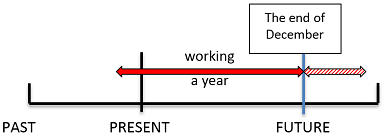
- "At the end of December, James will have been working at the company for a year."
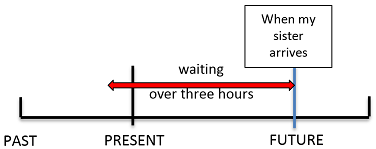
- "By the time my sister arrives at the airport, I will have been waiting for over three hours."
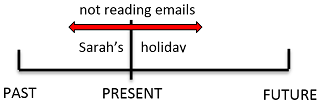
- "Sarah won't have been reading her emails because she’s on holiday."
Formulário
Nós formamos o futuro perfeito contínuo com "will have been" + formato "ing" do verbo principal.| Positivo |
I
You We They He / She / It |
will have been | waiting | for 3 hours. |
| Negativo |
won't have been
will not have been |
| pergunta | Will |
I
you we they he / she / it |
have been | waiting | for 3 hours? |
Muitas vezes usamos o futuro contínuo perfeito com eventos ou tempos futuros e com expressões que se referem ao futuro, como "when" ou "by the time (something happens)" e "for how long".
Exemplos
- "I will have been reading this book for months by the time I finally finish it."
- "She won’t have been expecting you to arrive so early."
- "When you finish your exams, for how long will you have been studying English?"
Pratique
.Pratique ainda mais
Complete as frases para formar o futuro perfeito contínuo com a resposta correta entre a, b, c ou d:.
Create a free Getting Started account
Related links
The following exercises include use of this grammar structure:
You might also be interested in:
- Business English vocabulary exercises
- Scenario-based dictation exercises – business English Pro account
You might also be interested in:
Iniciante
- Passado simples
- Pretérito Imperfeito
- Presente simples
- Presente contínuo (presente)
- Presente Perfeito
- 'Going to' e 'will'
- Presente contínuo (futuro)
- Imperativos
- To be
- Pronomes: sujeito, objeto
- Pronomes: relativos
- Adjetivos e pronomes possessivos:
- Adjetivos e pronomes: demonstrativos
- Ordem das palavras adjetivas básicas
- Perguntas Quantitativas (pronomes interrogativos)
- Artigos: a, an, the
- Preposições: de tempo e espaço
- 'There is'/'there are' e quantificadores
- Conjunções 'and', 'or', 'but'
- Comparativos / superlativos ('than')
- Zero condicional ('if')
- Primeiro condicional ('if')
- Verbos modais: 'can/can't', 'could', 'will', 'shall'
- Padrões de verbo
- Sequence adverbs
Intermediário
- Pretérito perfeito
- Passado Simples vs. Presente Perfeito
- Passado Simples vs. Passado Contínuo
- Presente perfeito contínuo
- Futuro simples
- Futuro do Pretérito
- Voz Passiva
- Discurso indireto
- 'Used to' / 'would'
- Segundo condicional
- Terceiro condicional
- Orações subordinadas relativas
- Pronomes reflexivos
- Verbos modais: 'must', 'have to', 'should', 'should have'
- Padrões de verbo: gerúndio ou infinitivo
- Advérbios de intensidade
- Ordem dos adjetivos
- Adjetivos: 'ed' ou 'ing'

Gramática
Identifique e concentre-se rapidamente em questões gramaticais
- Grammar worksheets and test
- Scenario-based grammar exercises
- Grammar additional practice questions
- Verb conjugation practice
- Conditionals practice
Improve your grammar

Vocabulário
Vocabulary exercises:Aumente seu vocabulário utilizando nossos três treinadores de vocabulário
- Trainer de vocabulário de Inglês geral
- Trainer de vocabulário de inglês para negócios
- Treinador de idioma
Aprenda vocabulário


Exercícios de ditado
Pratique suas habilidades de escuta e ortografia usando nossos exercícios de ditado:
- Scenario-based dictation exercises - general English
- Scenario-based dictation exercises - business English
- Dictation: focus on grammar
- Números
Exercícios de ditado concluídos

Video aulas
Concentre-se em áreas específicas do inglês empresarial utilizando nossas vídeoaulas
Faça uma aula de vídeo